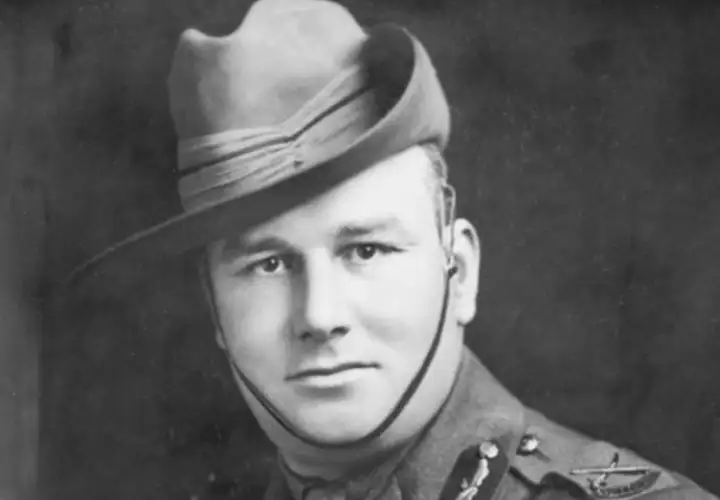
Major General Harold Edward 'Pompey' Elliott CB, CMG, DSO, DCM, VD was a respected, empathetic and outspoken military leader and Victorian politician.
Early years
Elliott was born in West Charlton, Victoria on 19 June 1878 and studied at Ballarat College and the University of Melbourne.
Military career
He joined the service in 1900 and served in the Boer War, where he earned the Distinguished Conduct Medal.
In the First World War, he was instrumental in victories at Bullecourt, Polygon Wood and Villers-Bretonneux. Nicknamed by his men after the famous footballer, Fred “Pompey” Elliott, he was an inspiration to those he led. His military expertise was responsible for success on the battlefield and fewer lives lost.
He always put the safety of his men first. He opposed the action of the 15th Brigade on the Western Front at Fromelles. This battle resulted in 5,533 casualties and 3,000 dead. Elliott wept as he greeted survivors from his brigade.
His outspoken nature led to quarrels with senior officers, and he treated some with contempt. This talent for speaking without fear meant he missed out on promotions. Being overlooked in this way despite major achievements like defending Lone Pine at Gallipoli in 1915 was an ongoing source of disappointment for Pompey.
Politics
He entered the Victorian Parliament as a senator in 1919 as a Nationalist candidate and topped the Victorian poll, and he was re-elected in 1925.
He was involved in the affairs of returned soldiers and was chiefly responsible for redrafting the constitution of the Returned Sailors' and Soldiers' Imperial League of Australia. He made it his mission to speak out on matters relating to the military and returned soldiers.
Death
Elliott’s sense of injustice and the strain of his war service finally took its toll. This led to ill-health and his death by suicide on 23 March 1931.
The grief at his death culminated in a full military funeral, on 25 March 1931, attended by thousands.
Black-plumed horses pulled his casket, with full military honours, on a gun carriage from his home in Camberwell. The procession, including a military band, wound its way along crowded streets for four miles.
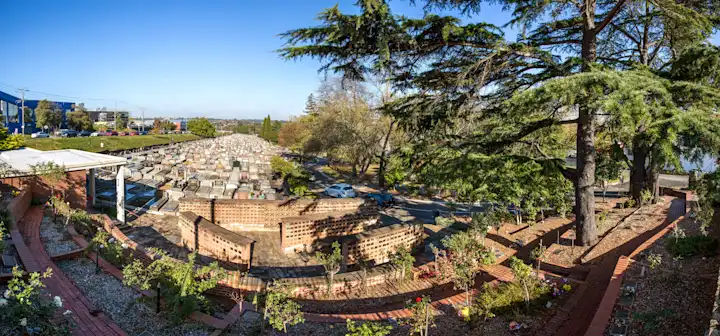
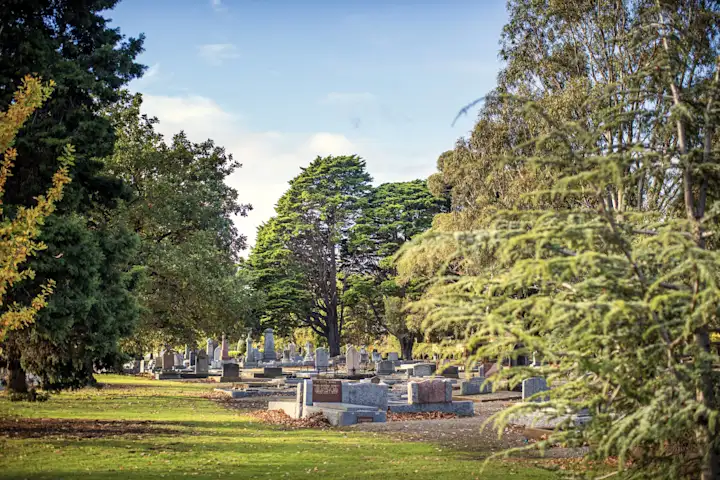
The former Prime Minister, Stanley Bruce, marched as a common soldier alongside. His grave at the Burwood Cemetery bears the epitaph (from Shakespeare's Julius Caesar) "This was a man". Originally called Nunawading General Cemetery, his final resting place was a hub of funeral activity until the early 1980s when it reached capacity.
Having married Catherine Fraser, daughter of Alexander Campbell, on December 27 1909 at Northcote, he was survived by his wife, Catherine, son, Neil and daughter, Violet.
Bibliography
Adapted from material supplied by historian Dr Jan Penney, GMCT Trust member 2010-2020.
Adapted from The Australian Boer War Memorial Corporal Harold Edward Elliot DCM (later Major General Harold Edward 'Pompey' Elliott, CB, CMG, DSO, DCM, MID, VD) [website]
Australian War Memorial (n.d.) Harold Edward “Pompey” Elliot [website]
Bean C E W (1921, 1924) The Story of Anzacs – Volume 1 and Volume 2, Official History of Australia in the War of 1914-1918, Australian War Memorial [website]
McMullin R (2009) Pompey Elliott, Scribe Publications
McMullin R (2017) Pompey Elliott at War: In his own Words, Scribe Publications