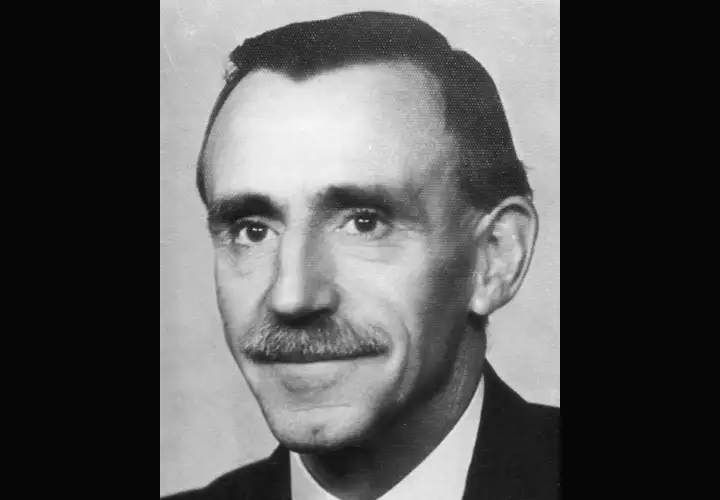
John S. Clark was a self-taught entomologist best known for his study of Australian ants.
Early years
Clark was born in Scotland and started his working life as a wheelwright. He arrived in Australia in 1905 and worked on Queensland railways. This role gave him opportunity to study the insects he saw around him. While interested in entomology (the study of insects) in his youth, he became a serious collector.
Career
Clark married his first wife, Maggie Forbes in 1908 and moved to Western Australia working on the railways. His collection attracted the attention of an entomologist in the Department of Agriculture. Despite Clark's lack of qualifications, they took him as an assistant. Entomology was then in its infancy as a study and positions were hard to find.
In 1926 be became Entomologist at the National Museum of Victoria but he was unhappy. Unfortunately, his manner and lack of academic training led to arguments with his peers. He spent much of his time applying for other roles. He worked here for 20 years and made several large private collections of ants, some of which he sold to the Museum.
When the museum appointed Richard Pescott as Director in 1944, Clark resigned, losing his entitlements.
Personal life
Clark’s personal life was also difficult. He had 4 children with Maggie before she died in 1935. He then married Phyllis Claringbulls in 1939, but she died shortly after giving birth to their second daughter. Clark decided he could not manage and sent his 2 daughters to an orphanage.
All 6 children survived him. One daughter, Ellen Clark, was a noted naturalist in her own right and later worked with her father at the Museum.
Death
He continued to write and research after leaving the museum. With no entitlements, he lived in Mooroolbark in poverty until his death on 1 June 1956.
Recognition
His contributions to myrmecology (the study of ants) are famous among ant collectors around the world. His collections are at CSIRO Canberra, Museum of Victoria, the Natural History Museum in London and the Comparative Zoology Museum in Cambridge.
He published many papers in his career and described more than 200 new species of ants. His most famous is the 'dinosaur ant', Nothomyrmecia macrops - the most primitive living ant.
Bibliography
Adapted from material supplied by historian Dr Jan Penney, GMCT Trust member 2010-2020.
AntWiki (n.d.) Clark, John S. (1885-1956) [website]
Carter H J (1933) Gulliver in the Bush, Angus & Robertson
Musgrove A (1932) Bibliography of Australian Entomology 1775-1930, Royal Zoological Society of New South Sales
Prescott R T M (1954) Collections of a Century: The History of the First Hundred Years of the National Museum of Victoria, National Museum of Victoria
Upton M S (1993) Clark, John (1885-1956) Australian Dictionary of Biography, Australian National University [website]